
DeepSeek Sparse Attention
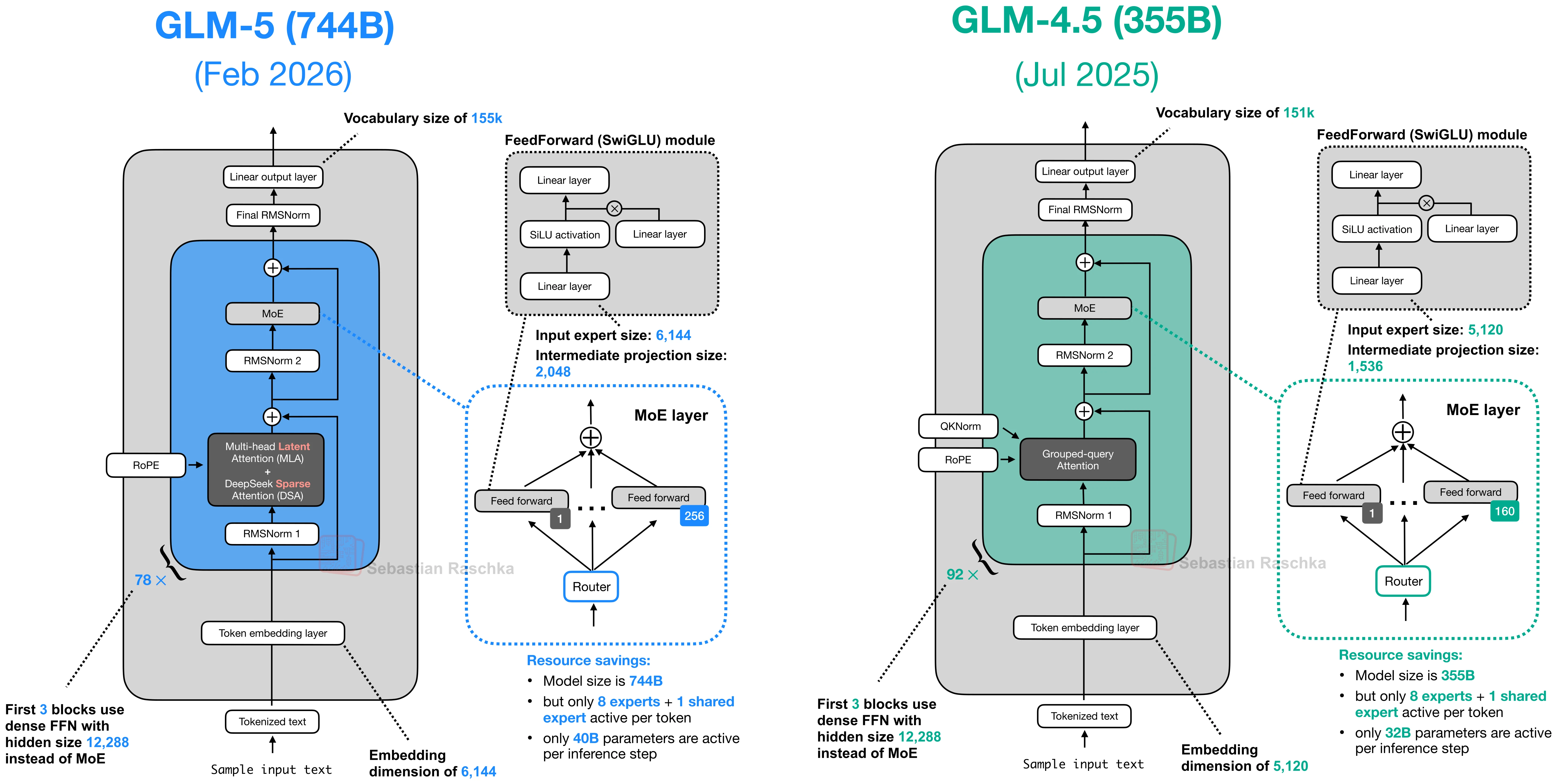
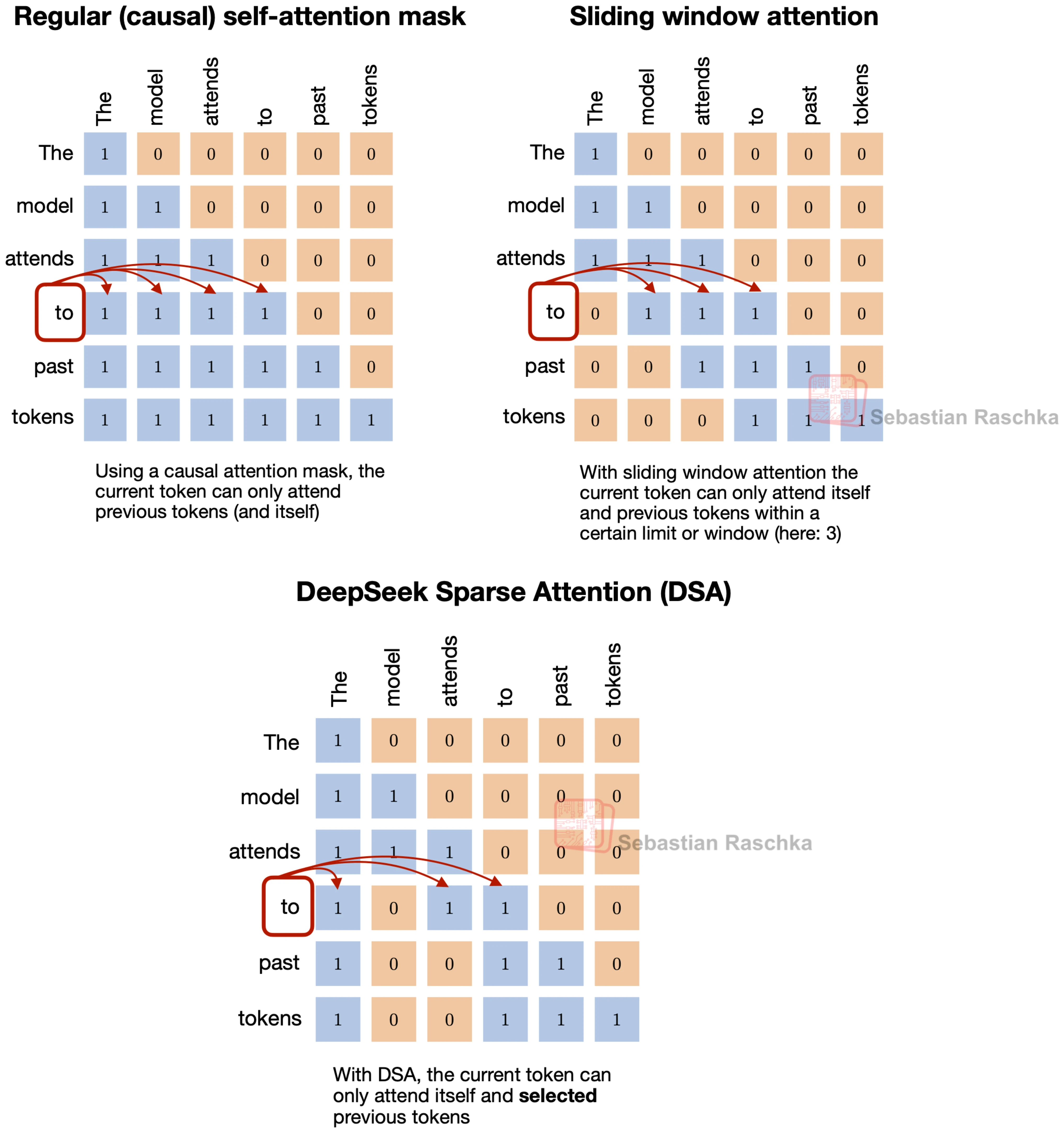
DeepSeek Sparse Attention uses an indexer and token selector to keep a learned subset of the visible prefix. A selected token can be far outside a fixed local window.
Summary
Learn a sparse attention pattern
Practical benefit
Reduce long-context attention work
Example architectures
DeepSeek V3.2, GLM-5, GLM-5.2, Tencent Hy4-preview, and Naive-N0.5-Flash
Learned sparsity versus a fixed window
The indexer and selector
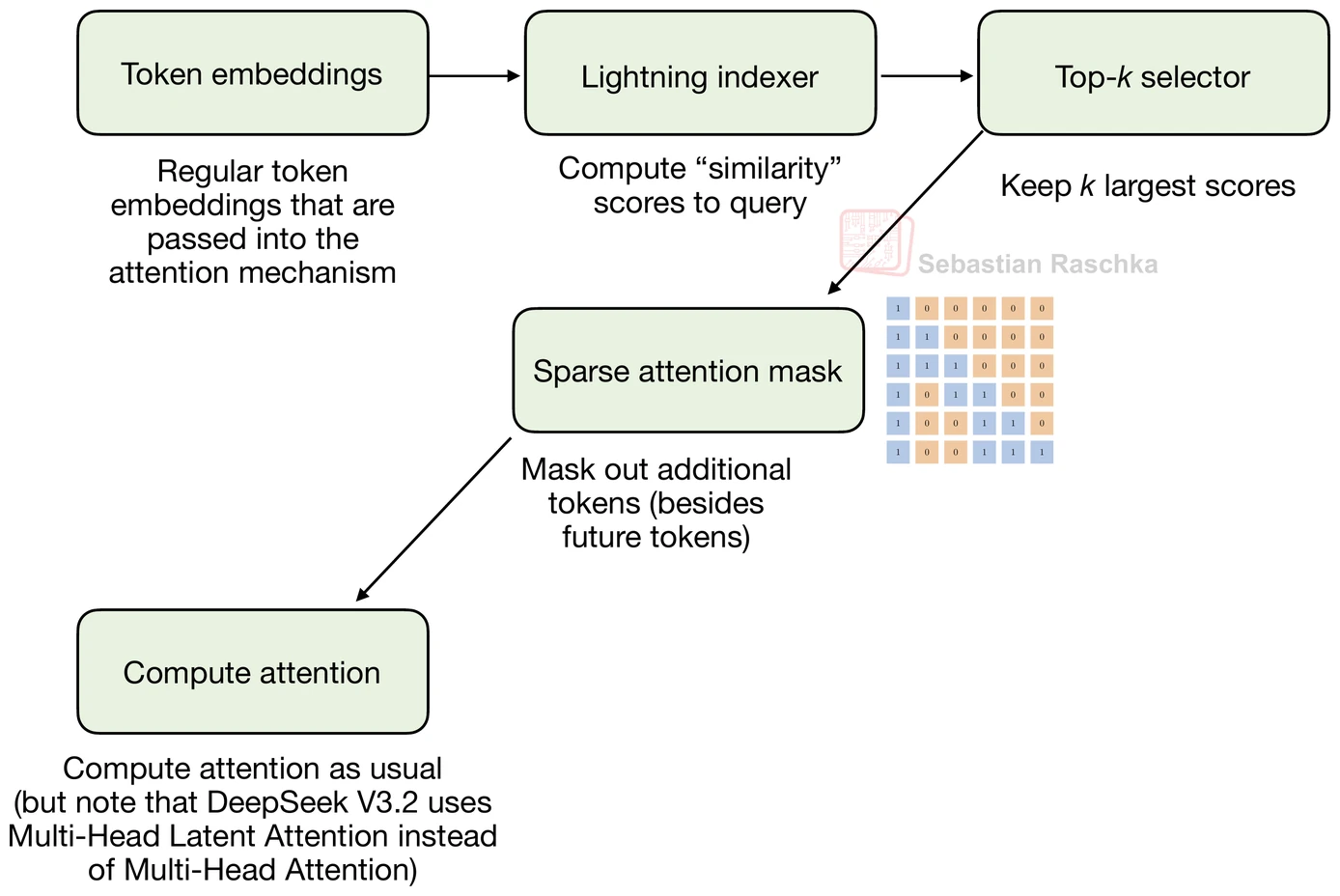
The lightning indexer scores an earlier position s for the current position t as follows:
# t = current position, s = earlier positions, j = indexer head
scores[s] = sum(w[t,j] * relu(dot(q[t,j], k[s])) for j in heads)
selected  = top_k(scores, k=2048)
output    = sparse_attention(query_t, selected)  # O(Lk) over the sequence
How DSA and MLA fit together
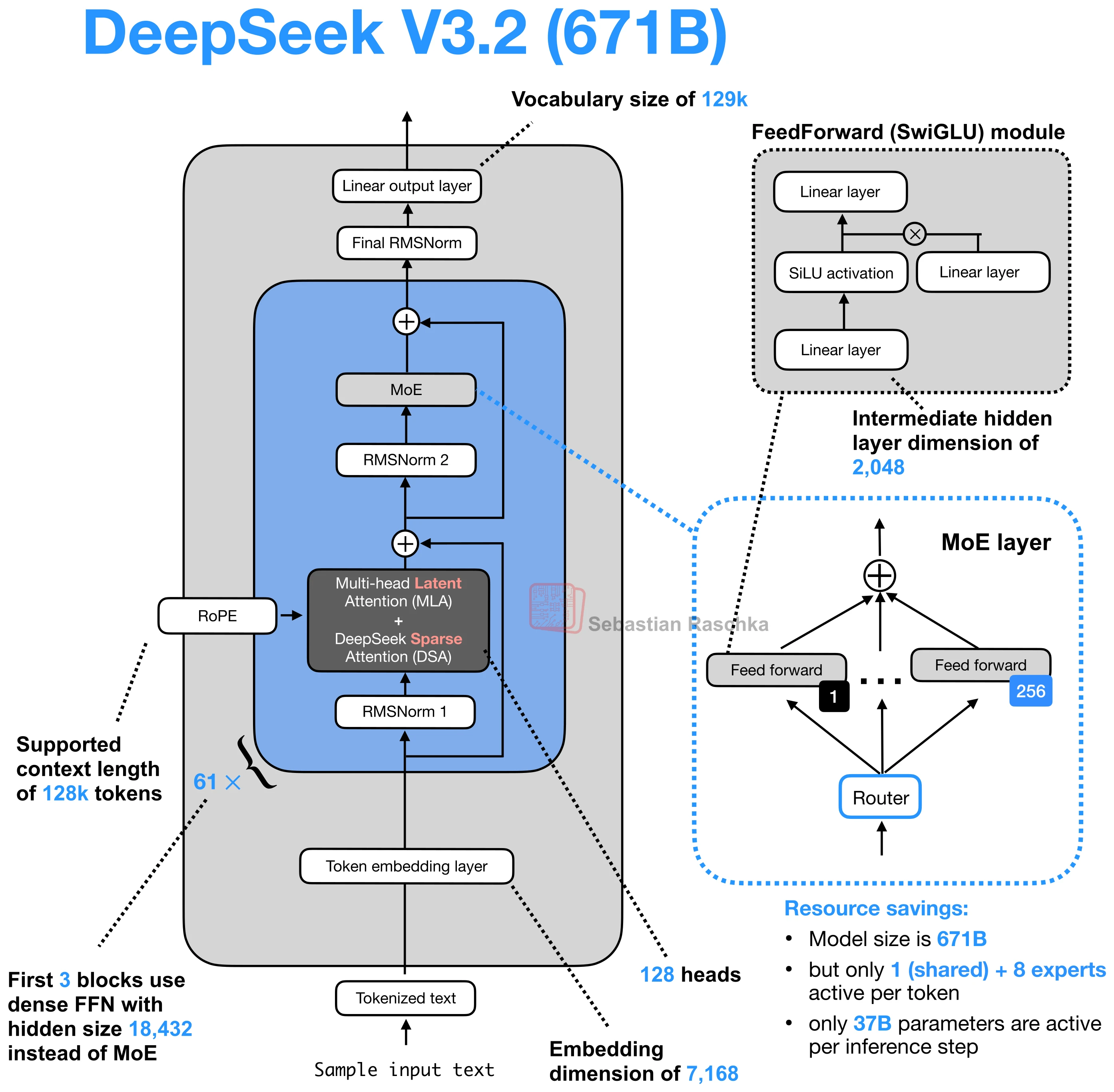
MLA compresses what is stored in the KV cache. DSA changes which stored positions the attention operation reads.
Naive-N0.5-Flash pairs DSA with GQA. Its nine DSA layers use four KV heads and a 16-head indexer that selects up to 2,048 tokens. The remaining 39 layers use 128-token sliding-window attention, leaving no full-attention layers (NaiveAI release).
The k in top-k, not to be confused with the k used for keys in the equation, is set to 2048 in the released model code. The indexer and token selector result in each token attending to a few past tokens that the model has learned to consider most relevant, rather than all tokens or a fixed local window.
The goal was not to improve performance over the dense base model but to reduce performance degradation from the sparse attention mechanism while benefiting from improved efficiency. GLM-5 later adopted DSA and MLA. GLM-5.2 adds IndexShare so that nearby layers can reuse selected positions.
Sources